

From Commitment to Territorial Security through the Intergovernmental Land Tenure Commitment: Strengthening Land Rights and Governance in the Face of Industrial Pressures
One year after governments launched the Intergovernmental Land Tenure Commitment (ILTC) at COP30 in Belém, a new report released at COP31 highlights a critical opportunity to build on this landmark commitment and translate it into lasting territorial security for Indigenous Peoples, local communities and Afro-Descendant Peoples (IP, LC, and ADPs).
From Commitment to Territorial Security through the Intergovernmental Land Tenure Commitment: Strengthening Land Rights and Governance in the Face of Industrial Pressures draws on spatial analysis across the Amazon, Congo Basin, Mesoamerica, and Indonesia, along with case studies from seven countries. It documents extensive pressures from extractive and large-scale industrial activity on the territories of Indigenous Peoples, local communities and Afro-Descendant Peoples, including lands where tenure is already legally recognized. The report also identifies practical opportunities for governments and partners to advance territorial recognition, strengthen governance and protection, and better align industrial development decisions with territorial rights.
Downloadable maps from the report can be found here. Report partners include: Earth Insight, the Global Alliance of Territorial Communities (GATC), Tenure Facility, Rights and Resources Initiative (RRI), Global Land Alliance (GLA), and PINGO's Forum.
Key Findings:
- Territorial rights and governance are fundamental. Territorial rights and governance are fundamental. Indigenous Peoples, local communities, and Afro-descendant Peoples, the right to land and territory is integral to self-determination, culture, and livelihoods. These rights should be respected regardless of their contribution to conservation or climate
- Industrial pressures on IP, LC, and ADP territories are substantial and continue to intensify. In the Amazon Basin, oil and gas blocks overlap approximately 31 Mha (12%) of Indigenous Peoples’ and local communities' territories, mining concessions 9.8 Mha, and industrial logging concessions 2.4 Mha. In Mesoamerica, mining concessions overlap 18.7 Mha (17%) of their lands. In Indonesia, wood concessions overlap approximately 6 Mha (18%) of Indigenous lands. In the Congo Basin, oil and gas blocks overlap 38% of mapped community forests, and mining concessions 42%.
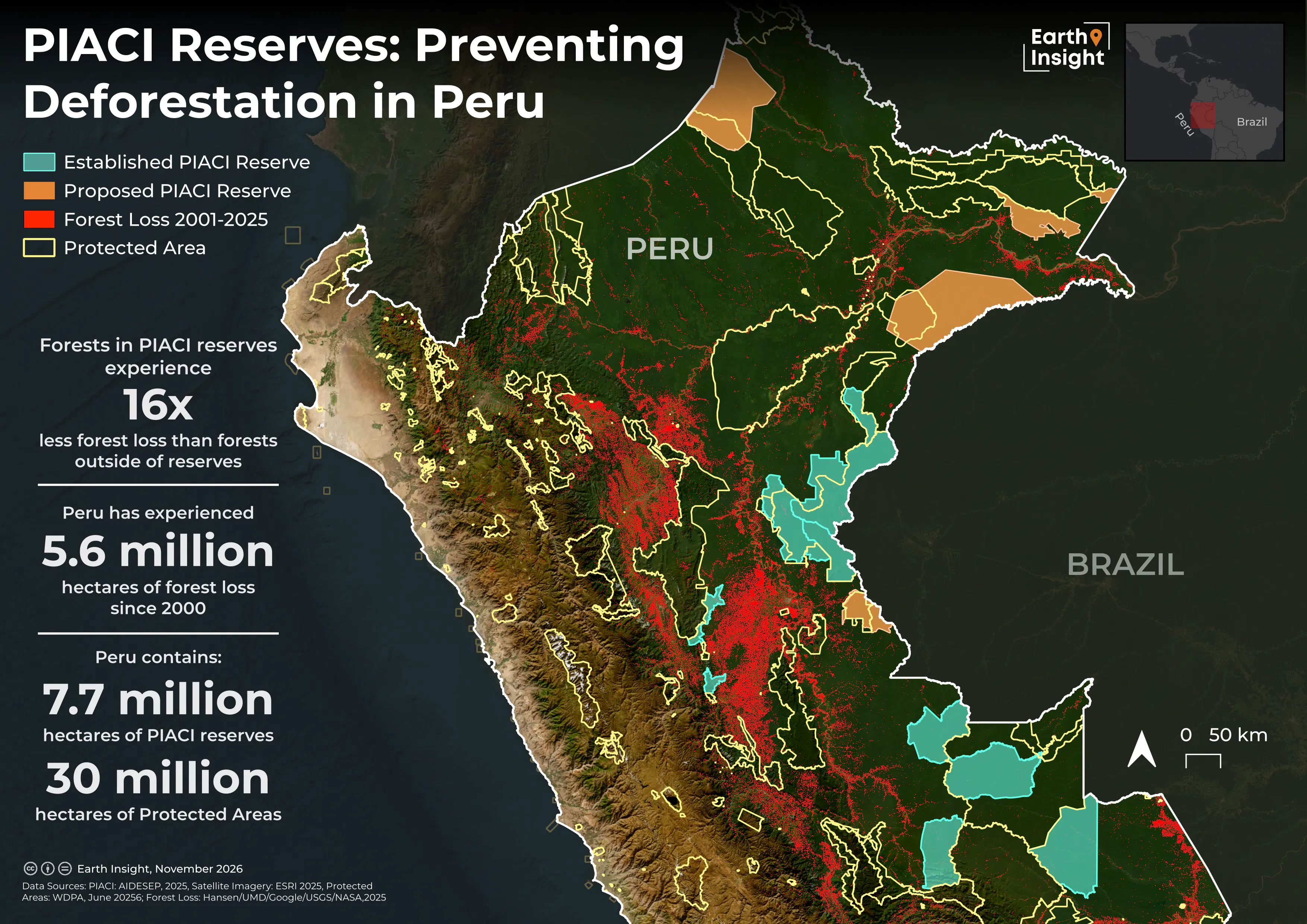
- Collectively held territories are globally significant and essential to achieving climate and biodiversity commitments. In the Peruvian Amazon, for example, forests within established and proposed reserves for Indigenous Peoples in Isolation and Initial Contact (PIACI) experienced 16x less forest loss than forests outside them.
- The ILTC and the renewed Forest and Land Tenure Pledge create a significant opportunity to connect political commitment, implementation, and finance.
The ILTC encompasses two complementary commitments: recognizing tenure rights across at least 80 Mha and strengthening land governance rights and protection across 80 Mha where tenure is already recognized. A renewed and complementary US$1.8 billion Forest and Land Tenure Pledge for 2026–2030 supports these rights and territorial stewardship through more direct, long-term, and flexible financing.
The report’s central finding is that meeting the ILTC’s hectare commitments, while essential, is not sufficient to ensure meaningful territorial protection. Governments must also ensure that rights are effectively respected and that rights-holders can exercise governance and decision-making authority over their lands and resources after recognition, free from extractive and large-scale industrial activities that undermine them.
Territorial rights and community governance deliver measurable climate and biodiversity outcomes.
In Peru, the 7.7 million hectares of forests in established and proposed reserves for Indigenous Peoples living in voluntary isolation and initial contact saw 16 times less forest loss than forests outside them. These territories illustrate the relationship between territorial protection, nature stewardship, and climate.
Indigenous Peoples and communities are leading the response.
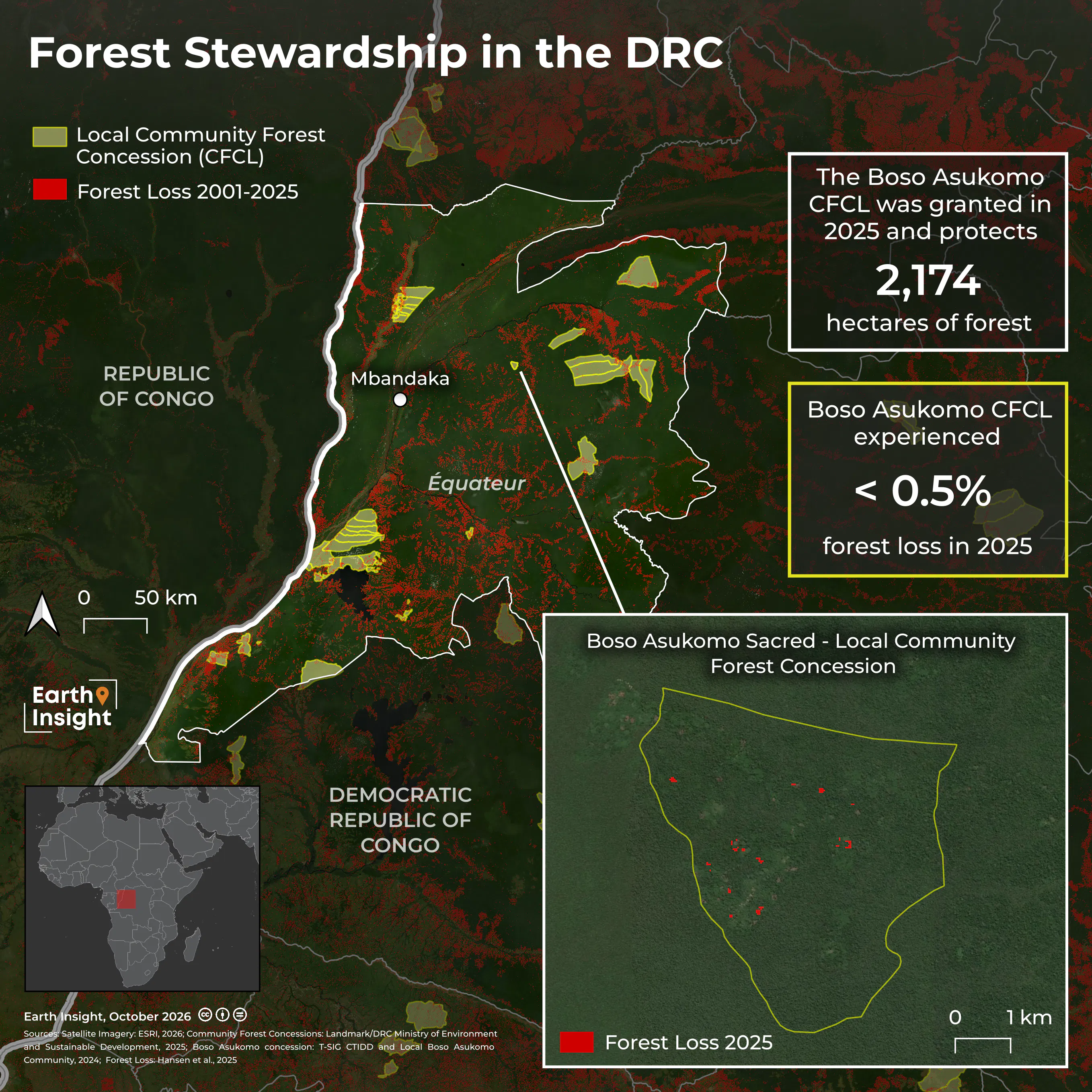
In the Democratic Republic of the Congo, the customary management of the Boso Asukomo sacred community forest regulates forest use and sustains biodiversity, and resulted in forest loss below 0.5% in 2025, a year when non-fire forest loss across the DRC reached a record high. The Boso Asukomo sacred forest shows the promise of community forests for conservation goals when legal frameworks support local livelihoods.
Recognition must be matched by protection.
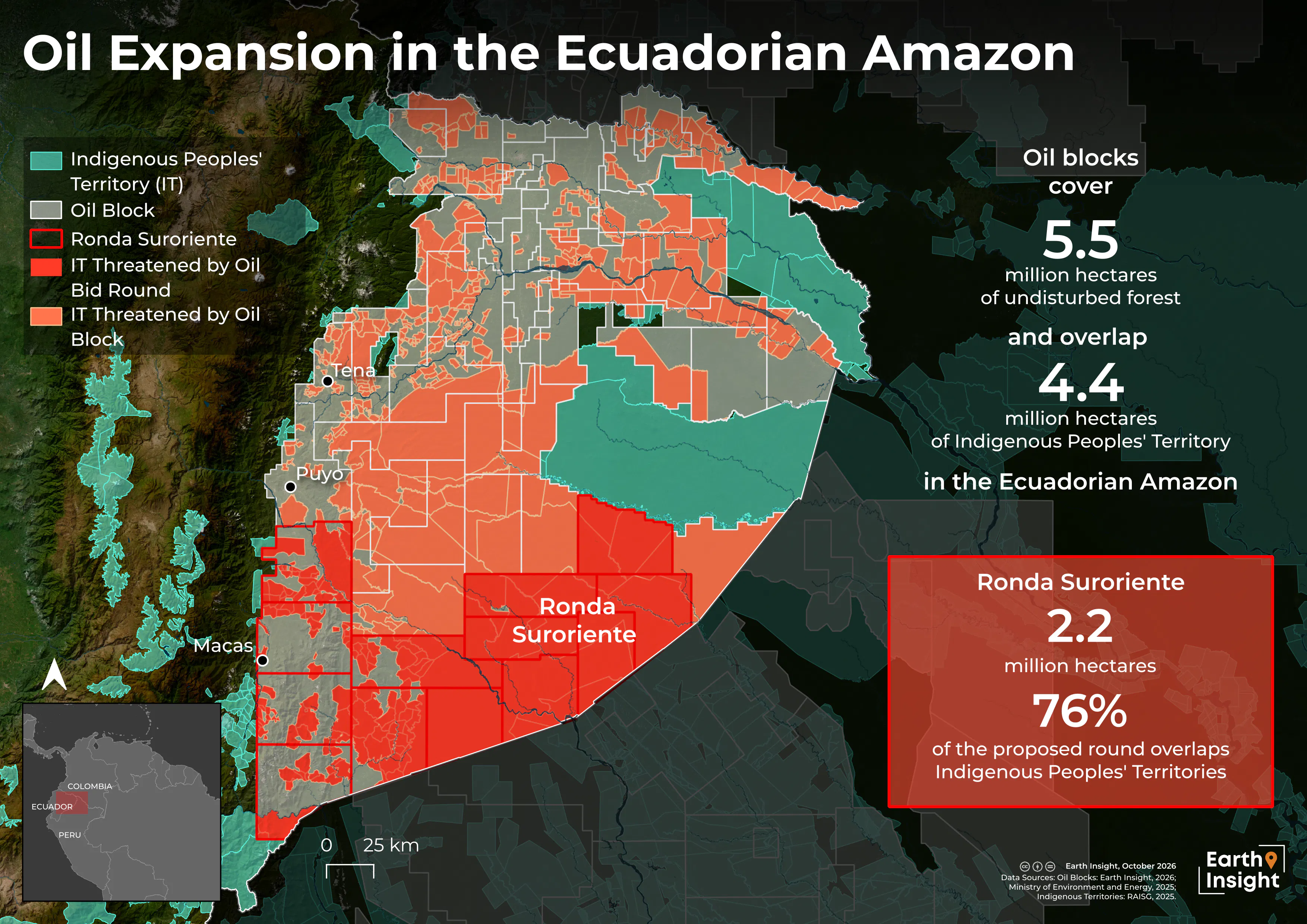
In the Ecuadorian Amazon, a newly announced round of oil and gas licensing is creating renewed pressures on decades of hard-won Indigenous Peoples’ territorial rights. The Suroriente oil licensing round overlaps 76%, or 1.6 million hectares, of titled territories, and poses a threat to nearly a quarter of Indigenous territories in the Ecuadorian Amazon. Previous licensing rounds in Ecuador have catalysed regional Indigenous mobilization to defend territorial rights and Indigenous authority over decisions concerning development in their territories.
Industrial pressure is widespread.
Previous research has identified that extractive and large-scale industrial activities are a major threat to Indigenous Peoples and Local Communities lands in the Amazon, Congo Region, Mesoamerica, and Indonesia. Across the Amazon, oil and gas blocks overlap 31 million hectares of Indigenous Peoples and local community territories, or 12% of their total area. Mining concessions overlap another 9.8 million hectares, and industrial logging overlaps 2.4 million hectares. Oil and gas blocks overlap 38% of community forests in the Congo Basin. Mining concessions overlap 17% of Indigenous Peoples and community lands in Mesoamerica, and wood concessions 18% of Indigenous Peoples lands in Indonesia.
The pressures on IPs, LCs, and ADPs territories intensify as growing demand for new minerals, energy, agricultural commodities, and infrastructure pushes into new areas. In Indonesia, the bioenergy industry has expanded rapidly into Indigenous customary lands and the forests that support them. Haul zones that supply wood chip and pellet mills overlap 347 Indigenous territories covering more than 4.3 Mha.
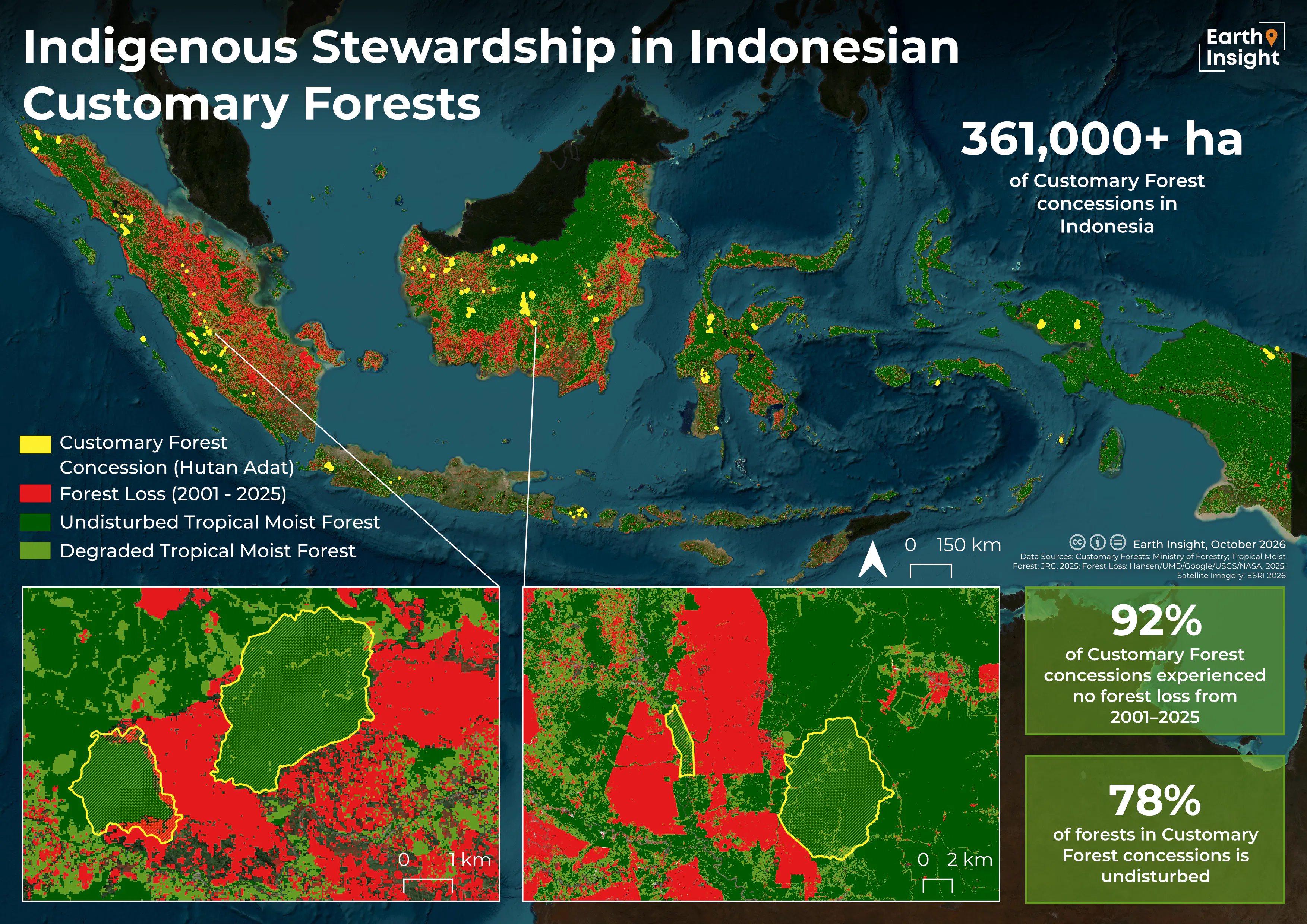
Strengthening territorial rights is an investment in people, nature and climate resilience.
Strengthening tenure, territorial governance and community-led economies is a durable, cost-effective investment in conservation, climate action and sustainable development. In Costa Rica, Indigenous Peoples’ territories keep forest loss at half the rate of surrounding areas and contribute to ecological connectivity.
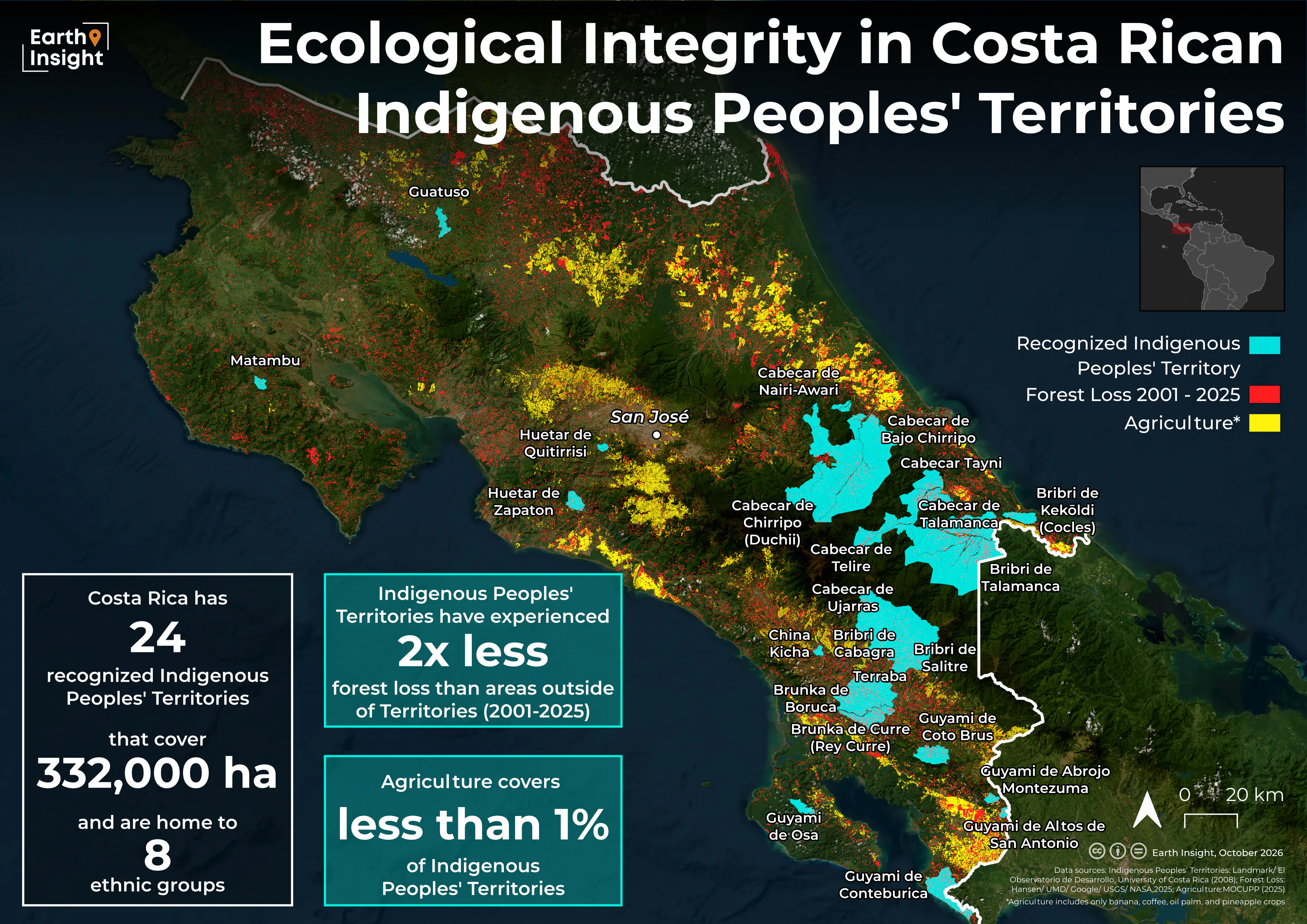
Key Recommendations: Turning Recognition into Lasting Tenure Security
The evidence presented in this report points to a central conclusion: Meeting the ILTC’s hectare commitments is essential, but meaningful implementation depends on whether territorial rights are effectively respected and exercised after recognition.
The ILTC gives signatories an opportunity to align tenure recognition and governance with land-use planning, licensing, and investment decisions, while respecting the rights and priorities of affected peoples and communities. Seven interconnected priorities emerge as key recommendations from the report:
1. Accelerate recognition of territorial and tenure rights. Governments should accelerate legal and administrative processes for recognizing the rights of IPs, LCs, and ADPs to lands and territories, including customary tenure, and address barriers to recognition. Recognition processes should enable meaningful participation by women and youth, consistent with customary institutions and collective decision-making.
2. Strengthen Indigenous and community governance and territorial management. ILTC implementation must strengthen the legal, institutional, and financial conditions under which IPs, LCs, and ADPs govern their territories, including planning, monitoring, and protection mechanisms consistent with their governance systems and priorities.
3. Address industrial and infrastructure pressures affecting territories. Governments should address conflicts between territorial rights and mining, oil and gas, logging, industrial agriculture, energy, and infrastructure; preventing the erosion or rollback of recognized rights; and ensuring that conservation measures, including protected areas, respect customary tenure and do not lead to dispossession or displacement.
4. Strengthen monitoring, reporting, and accountability. Ensure meaningful rights-holder participation, including women and youth through their own institutions, and assess progress in recognition and effective governance.
5. Mobilize and align finance for recognition, governance, and territorial stewardship. Adequate, accessible, long-term, and flexible finance will be needed across the full range of ILTC implementation, including tenure recognition, territorial governance and monitoring, institutional strengthening, territorial protection, stewardship, and Indigenous- and community-led economies.
6. Strengthen policy coherence and accountability in land-use and investment decisions. Governments have a responsibility to ensure that land-use planning, industrial licensing, infrastructure, and investment decisions uphold the rights of IPs, LCs, and ADPs and are consistent with ILTC commitments.
7. Align implementation and strengthen partnerships. Governments should integrate territorial rights and Indigenous- and community-led governance into relevant national biodiversity, climate, land-use, and development frameworks.