

Call for establishing all proposed reserves in Peru, eliminating extractive concessions from indigenous territories
Read full story in Down to EarthDown to Earth
May 7, 2026
Akshit Sangomla
Summary
- The Yavarí-Tapiche Territorial Corridor faces imminent threats from oil and gas expansion, logging, mining, highways and organised crime.
- It is home to the largest population of Indigenous Peoples in Voluntary Isolation and Initial Contact in the western Amazon.
- Indigenous organisations demand creation of all PIACI reserves, removal of extractive concessions and long-term funding for territorial protection.
The largest population of Indigenous Peoples in Voluntary Isolation and Initial Contact (PIACI in Spanish) living in a proposed 16 million hectare protected territory along Brazil and Peru border in western Amazon is under imminent threat, according to a new report published on May 6, 2026.
Oil and gas field exploration and expansion, mining, logging, fishing, construction of highways, drug trafficking and other organised crimes, both legal and illegal, have strained the Yavarí-Tapiche Territorial Corridor, called the ‘Land of Brave Men’ by indigenous communities, the research showed. The report was co-authored by the Regional Organisation of Indigenous Peoples of the East, the Coordination of Indigenous Organisations of the Brazilian Amazon, the Interethnic Association for the Development of the Peruvian Rainforest and Earth Insight.
The Corridor covers an area more than twice the size of Panama. It runs along the western border states of Amazonas and Acre in Brazil, with the Loreto and Ucayali departments of Peru in the Amazon River’s southern basin.
“Most of the Corridor’s forests (66 per cent) are in Brazil where 90 per cent are under some protected status. Brazil recognises at least 17 isolated Indigenous groups who live inside the Corridor, mostly in the Vale do Javari Indigenous Territory,” the researchers wrote in the report.
On the Peruvian side, the Corridor is a maze of national parks and protected areas that are intermixed with indigenous reserves. While the government of Peru has recognised indigenous communities such as the Matsés, Isconahua, Remo, Kapanawa, Mayoruna, Matis, Korubo, Marubo, Kulina-Pano, Flecheiro (Tavakina), the process of approving the lands that constitute the Corridor has been mired in bureaucratic hurdles.
”Geospatial analysis and firsthand testimony reveal oil and gas, logging, illegal mining, road expansion and political persecution closing in on people who live in one of the Amazon’s largest contiguous and most biodiverse forests,” according to a press release from the organisations.
“Invaders are cutting down trees in our territories, without trees there is no water. On top of the deforestation and illegal logging, climate change is also having great effects on our territories,” said Wanen Kanamari, technician, Isolated Peoples Program, COIAB, during a webinar.
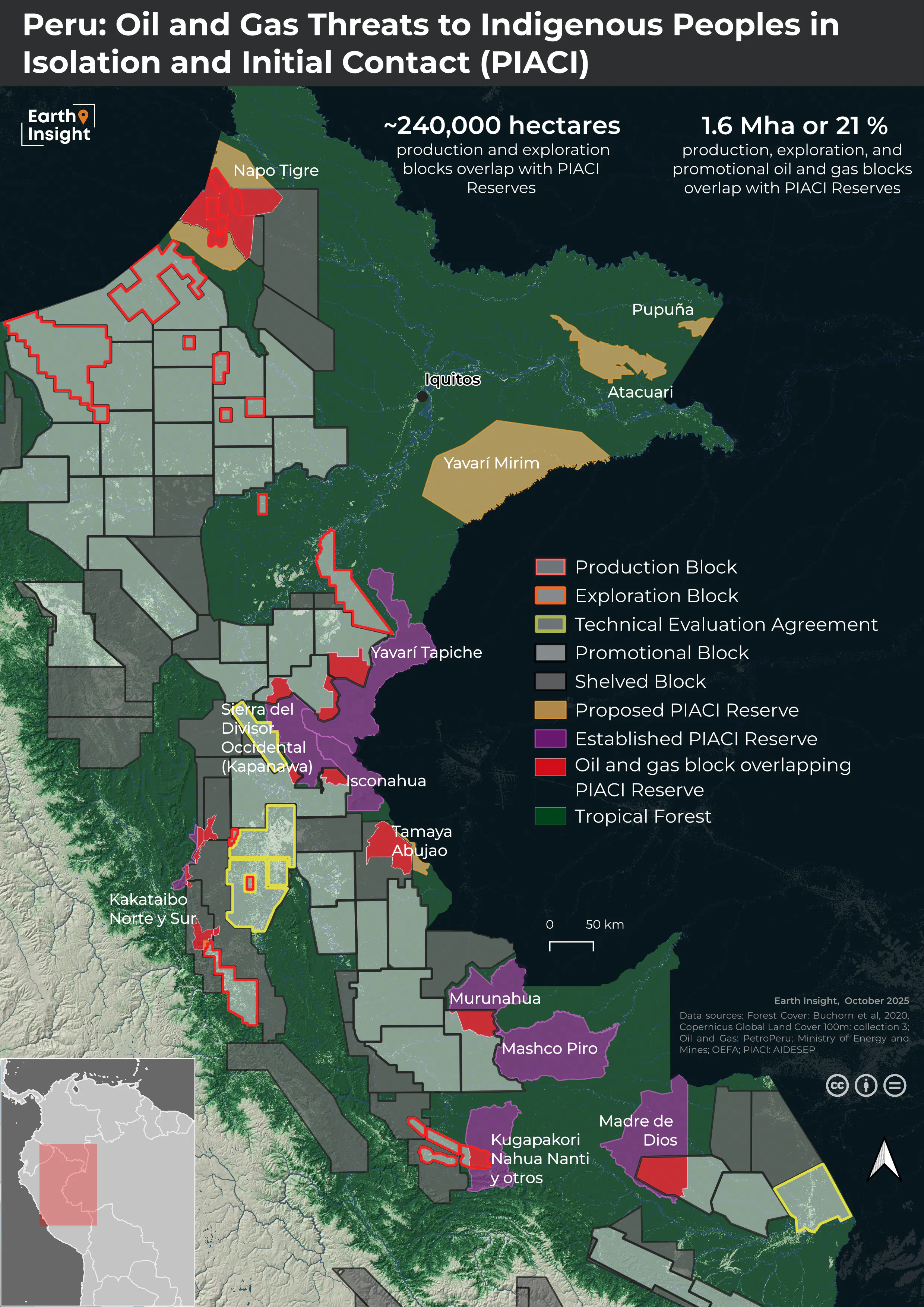
Oil and gas blocks overlap with more than 10 per cent of the corridor. This includes 1.7 million hectares of intact tropical moist forest which are high biodiversity regions. The blocks also infringe upon Key Biodiversity Areas over 907,000 hectares. Key Biodiversity Areas are internationally recognised terrestrial, freshwater and marine ecological systems that are crucial for the persistence of biodiversity on the planet. Oil and gas blocks also threaten 713,000 hectares of Protected Areas in the Corridor.
“In 2024, an oil barge collision near block 95 spilled crude into the
Puinahua River near the Pacaya-Samiria National Reserve. Indigenous communities, whose lives depend on the river, could no longer drink or use the water. Since they had to stop fishing, they lost their main income. The compensation offered by the oil company never covered their losses,” according to the report.
“In 2025, two bills under consideration in Peru's legislature could allow oil and gas extraction in all natural protected areas, including the 18 natural protected areas where PIACI live,” according to the press release.
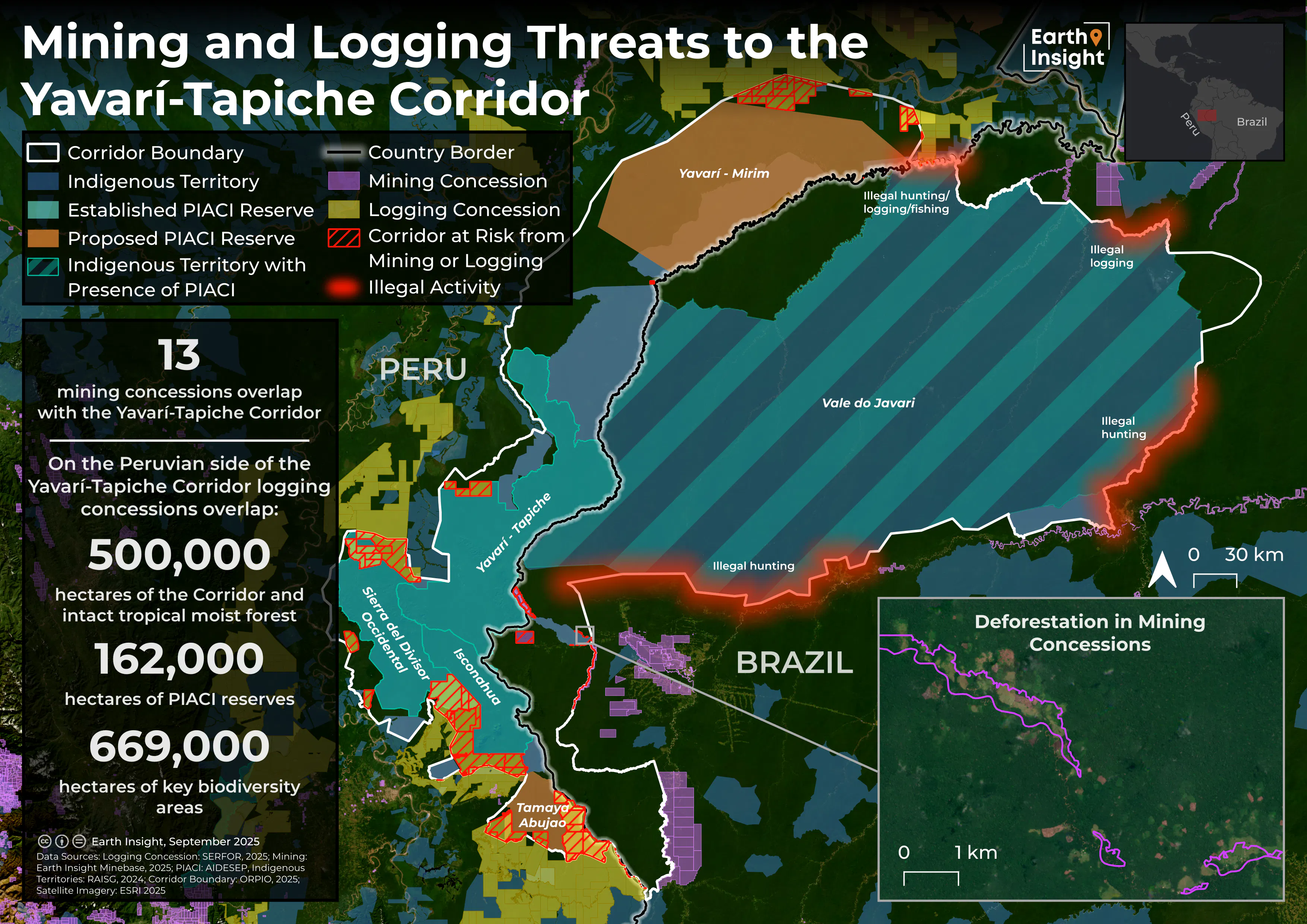
Logging concessions infringe upon 500,000 hectares of the Corridor in Peru with intact moist tropical forest. This is despite such concessions being illegal in proposed PIACI reserves. Around 12 per cent of proposed PIACI reserves are under threat from oil and gas exploration and expansion.
There are also two proposed highways through the corridor which will lead to more roads in the interiors of the forest because of the fishbone effect. “The first connects Cruzeiro do Sul in Brazil with Pucallpa in Peru and cuts directly through the Isconahua PIACI Reserve. A second would link Jenaro Herrera in Loreto with Colonia Angamos in the Yavari River basin,” according to the report.
Other illegal activities include gold mining and drug trafficking in the ‘Three Frontiers’ region, where Brazil, Colombia and Peru intersect. Illegal hunting and fishing in the regions further exacerbate the threats.
“The government often says there are so many obstacles to creating
a territorial reserve. But we protect territories with or without the state. We don’t know what is going to happen, but we are here now, defending the territory”, said Leo Chuma Tecca, president of the Matsés Native Community in the press release.